Food & shopping
Lasagna with béchamel
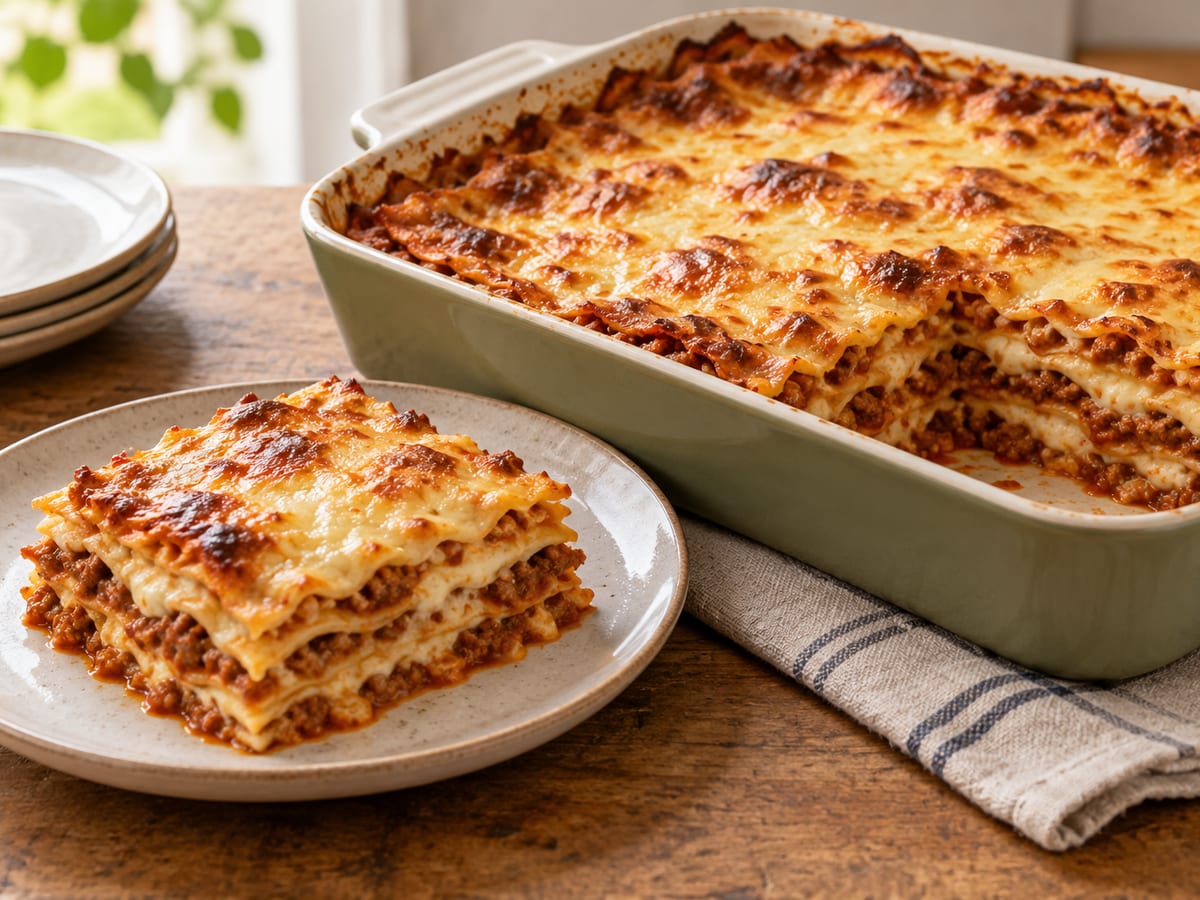
Cook a slow beef ragù, make a cheese béchamel and assemble lasagna for 10. Save the shopping list and the complete cooking sequence.
The checklist
- Olive oil · 1 tbsp
- Onion · 1
- Carrot · 1 medium
+ 39 more explained items
Time, servings and nutrition
Main courseItalian-inspired
Servings: 10 · 1/10 of the dish
- Preparation
- Cooking
- Extra waiting
- 10 min
- Planned total
The source budgets 4 hours cooking. Add preparation and up to 10 minutes standing. This is a planning allowance, not a measured kitchen result.
Approximate nutrition per serving
Uses 10%-fat beef, author-metric cheese and flour amounts, whole milk and Gruyère. No optional sugar; raw-ingredient energy includes wine without an alcohol-retention adjustment.
- Energy
- ≈ 615 kcal
- Protein
- 39.4 g
- Fat
- 30.6 g
- Carbohydrate
- 40.6 g
Calculation details
Planning times use the upper end of stated ranges. Cooling and extra oven loads may take longer.
Calculated from ingredient amounts using USDA reference foods. Brands and portion sizes change the result.
Recipe notes: slow ragù, béchamel, four pasta layers
This lasagna has two sauces: a slowly simmered beef ragù and a milk-based cheese sauce. Fresh pasta sheets separate the layers, with mozzarella over the top. Start early enough for the ragù to thicken before assembling the dish. A browned topping cannot make up for meat sauce that is still watery.
The vegetables need fine chopping so they soften into the sauce. Gather the measured seasonings before adding the tomatoes; once the lid is on, you can turn to the cheese sauce and prepare the baking dish. Keep the béchamel fluid enough to spread over the ragù. It should not be a solid paste or a thin splash of milk.
The shopping list commits to beef, fresh lasagna sheets and Gruyère in the sauce. Ricotta and sausage are not part of this version. Use a 250 ml measuring cup, a 15 ml tablespoon and a 5 ml teaspoon for the volume measures. The pasta and cheese quantities describe one deep family-sized dish; keep the same proportions if you later plan two smaller dishes. Let the finished lasagna stand before cutting so it is easier to lift out portions.
Who this list is for
A home cook preparing 10 normal portions, or 8 very large portions, in a 33 × 22 × 7 cm dish. Allow around 4 hours 20 minutes. Contains wheat and milk; Worcestershire sauce can contain fish.
Tips
Use a deep enough dish
The stated dish is 33 × 22 × 7 cm. A shallow tray may overflow; put it on a baking tray if you need protection from drips.
Allow time for the ragù
Most of the schedule is gentle cooking. Begin before guests arrive so you do not have to assemble with a watery sauce.
Choose one pasta type
This list uses 350 g fresh sheets. Dried pasta needs a different weight and preparation according to its packet; do not swap it in blindly.
Grate the cheese
Use a block of melting cheese for the sauce and mozzarella for the top. Pre-grated products can contain anti-caking ingredients that change the sauce.
Keep quantities for each sauce separate
Butter, flour and milk belong to the béchamel. Set them aside while preparing the ragù to keep the two methods easy to follow.
The checklist
24 ingredients · 12 steps
Print this page to tick items off on paper: the printout keeps only the checklist, with a box before every item.
Buy
Ingredients
- Olive oil · 1 tbsp
- Onion · 1
- Carrot · 1 medium
- Celery · 1 stalk
- Garlic · 2 cloves
- Beef mince · 1 kg
- Canned crushed tomatoes · 800 g
- Tomato paste · 1/4 cup
- Dry red wine · 1 cup
- Beef stock cubes · 3
- Bay leaves · 2
- Dried thyme · 1/2 tsp
- Dried oregano · 1/2 tsp
- Worcestershire sauce · 2 tsp
- Sugar · 1–2 tsp, only if needed
- Salt · 1/2 tsp + to taste
- Black pepper · 1/2 tsp + to taste
- Butter · 60 g
- Plain flour · 1/2 cup
- Whole milk · 4 cups
- Gruyère cheese · 2 cups grated
- Ground nutmeg · 1 pinch
- Fresh lasagna sheets · 350 g
- Mozzarella · 1 1/2 cups, tightly packed
Take along
Kitchen equipment
- Large heavy casserole with lid
- Saucepan, whisk and wooden spoon
- 33 × 22 × 7 cm baking dish
- Kitchen scale, 250 ml cup, 15 ml tablespoon and 5 ml teaspoon
- Knife, board and cheese grater
- Oven mitts and serving spatula
To do
Cook and serve
- Soften the vegetables — Finely chop onion, carrot, celery and garlic. Cook in 1 tbsp oil over medium heat for 10 minutes without browning.
- Brown the beef — Increase the heat, add 1 kg beef mince and break it up while cooking until browned.
- Start the ragù — Add tomatoes, tomato paste, wine, stock cubes, bay, thyme, oregano, Worcestershire sauce, 1/2 tsp salt and 1/2 tsp pepper. Reserve the sugar.
- Simmer until thick — Cover and simmer very gently for 1.5–2 hours, stirring occasionally. Uncover and simmer another 30 minutes. Taste; add 1–2 tsp sugar only if needed. Remove bay leaves.
- Make the butter-and-flour base — Melt 60 g butter over medium-low heat. Stir in 1/2 cup flour and cook, stirring, for 1 minute.
- Thicken the milk sauce — Gradually stir in 1 cup milk, then the remaining 3 cups. Cook over medium-high heat, stirring more often as it thickens, about 5–8 minutes.
- Finish the cheese sauce — Remove from heat. Stir in 2 cups grated Gruyère, a pinch of nutmeg, salt and pepper to taste. Keep thick but pourable.
- Prepare the dish — Heat conventional oven to 180°C (350°F). Put a little ragù in the base of the 33 × 22 × 7 cm dish.
- Build the first three pasta layers — Before starting, reserve enough pasta sheets for the fourth, top layer. The listed pasta weight is the total for the whole dish, not an amount for each step. Lay fresh sheets over the base. Add about 2 1/2 cups ragù and 1 cup cheese sauce. Repeat twice more for 3 filled layers.
- Add the fourth sheet layer and topping — Cover with the fourth pasta layer, spread the remaining cheese sauce and add 1 1/2 cups mozzarella.
- Bake until bubbling — Bake around 25 minutes until golden and bubbling. Check that the pasta is tender.
- Rest and portion — Rest 5–10 minutes before cutting into 10 portions. Refrigerate leftovers promptly; use within 2 days or freeze portions for later.
Questions and answers
Can I make this without alcohol?
The recipe author permits the same volume of alcohol-free red wine or beef stock in place of the wine. Stock varies in salt, so taste before adding extra seasoning. Do not claim that simmering removes all alcohol.
Does this use ricotta?
No. The creamy layer is a flour, butter, milk and cheese béchamel. Choose a different complete recipe if you want a ricotta filling.
Can I prepare the sauces ahead?
Cool and refrigerate promptly. Warm the ragù gently before assembly and loosen it with a little water if needed. Keep refrigerated leftovers for up to 2 days or freeze them; reheat only once until steaming throughout.
Make your own list in Cartdock
Save your own copy with the exact items, measures and instructions. Changes stay in your copy.
Open this guide in CartdockInstall Cartdock, then return to this page and tap Open. The store does not automatically restore this guide.
Say or type one phrase, and Rinka suggests items by section. Rinka is an AI, not a person: a language model writes the answers. Rinka needs a connection and your consent to AI processing. Without an account you get fewer questions; the number of questions depends on your plan. You can also add and edit items yourself.
Share your list with a link and tick items off together. People without the app can open the list in a browser.